

Coffee Subscription Boxes for Beginners: Picks That Fit
Last Updated: October 30, 2026
Quick Summary
Coffee subscription boxes deliver roasted coffee to your door on a schedule you choose. For beginners, a sampler is the lowest-risk start, since it lets you try several flavors before committing to full bags.
- Check whether the provider lists roast dates, since coffee tastes flatter as it ages.
- The Flavored Coffees Sample Pack and Single Origin Favorites Sample Pack each cost $24.99.
- Compare cost per cup after shipping, not the bag price alone.
- Start with monthly delivery, track how long the first bag lasts, then adjust the interval.
- Confirm that you can pause, skip, or cancel online before you order.
Table of Contents
- How Coffee Subscriptions Work for Beginners
- What to Look for in a Beginner Coffee Subscription Box
- Coffee Sampler Boxes: Try Before You Commit
- Coffee Subscription Cost: What You Actually Pay Per Bag
- Choosing Your Delivery Frequency
- Whole Bean or Ground: Matching Your Grind to Your Brewer
- Your Next Step: Ordering a Starter Sampler
- Frequently Asked Questions
How Coffee Subscriptions Work for Beginners
A coffee subscription box delivers roasted coffee to your door on a schedule you choose. For most beginners, the process is simple: you pick a plan, select a coffee, and receive a fresh bag every week, two weeks, or month. Borah Blend Coffee sells freshly roasted coffee and tea with direct-to-door delivery, so the same model applies here.
Many first-time buyers worry they'll be locked into a long contract. In practice, the flexibility depends on the provider, so check how easily you can pause, skip, or cancel before you order. Once you understand the basics, the rest of the decisions get much easier.
What to Look for in a Beginner Coffee Subscription Box
Start with three questions: how fresh is the coffee, how much variety do you get, and how easy is it to change your order? Freshness matters most. Ask whether the provider lists roast dates, because coffee tastes noticeably flatter as it ages. Borah Blend Coffee roasts in small batches, which is the freshness signal to look for.
Next, consider variety. A beginner who doesn't yet know whether they prefer chocolatey, fruity, or nutty flavors will learn more from a sampler than from a full bag of one coffee. Finally, look at flexibility. Pausing or skipping a delivery should take one click, not a phone call.
Coffee Sampler Boxes: Try Before You Commit
A sampler is the lowest-risk way to start. Instead of paying for full bags of beans you've never tasted, you get several small packs and find your favorites first. Borah Blend Coffee offers two options that suit this approach.
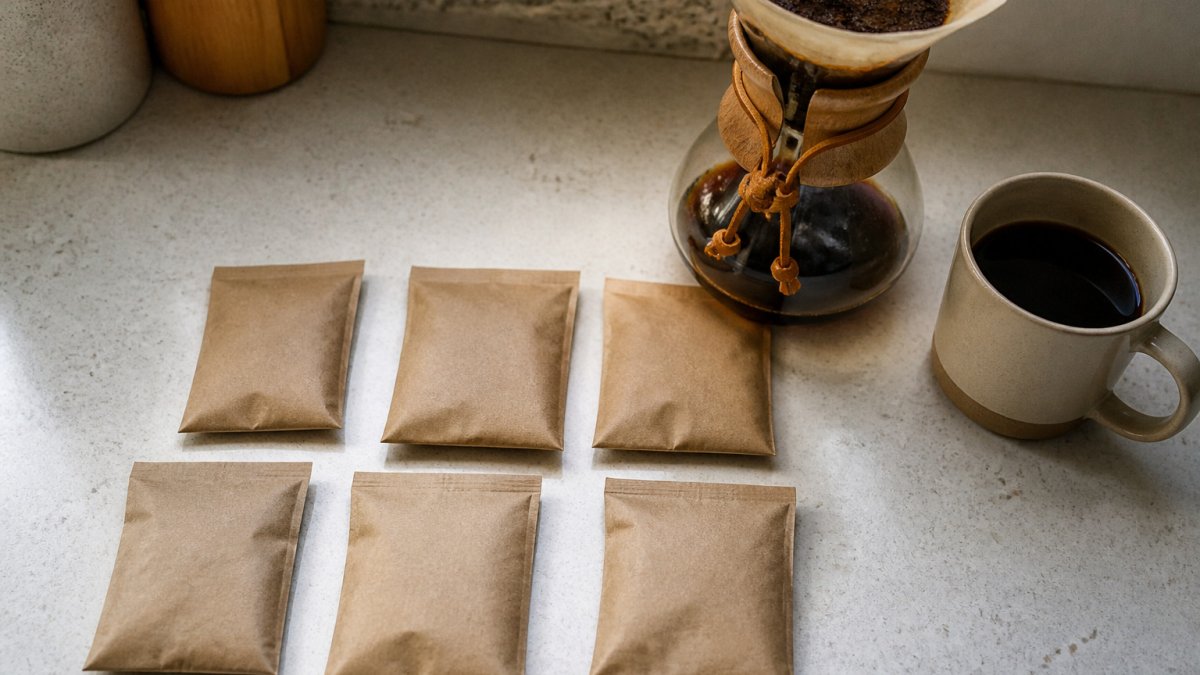
The Flavored Coffees Sample Pack includes six 2oz packs of flavored coffees, including French Vanilla, Hazelnut, Caramel, and Mocha, for $24.99. If you like sweet, dessert-style cups, this is a good place to start. The Single Origin Favorites Sample Pack lets you sample classic origins such as Brazil Santos, Colombia, and Ethiopia, also for $24.99.


Coffee Subscription Cost: What You Actually Pay Per Bag
Sticker price is the least useful number on a coffee subscription page. What matters is your cost per cup after shipping, minimum commitments, and how much coffee you actually drink. Most beginners overpay because they compare bag prices instead of per-cup costs.
Build your real cost per cup
Use this simple formula before you subscribe:
- Divide the bag price by the number of cups it makes. A 12 oz bag of whole bean coffee typically brews about 16 to 20 cups at a standard 1:16 coffee-to-water ratio (roughly 18 g of coffee per 10 oz cup). A $24.99 bag therefore lands around $1.25 to $1.55 per cup before shipping.
- Add shipping per delivery. If shipping is $5 and you order one bag, that adds about $0.25 to $0.30 per cup. Ordering two or three bags per shipment usually spreads shipping across more cups.
- Divide by your actual consumption. If you drink one cup a day, a 12 oz bag lasts about two to three weeks. If you drink three cups a day, it lasts less than a week, which changes which plan size makes sense.
The costs competitors bury
Advertised starting prices rarely include the costs that decide whether a subscription is a good deal:
- Shipping. Some services include shipping in the plan price; others add it per box. A "cheaper" plan with $6 shipping can cost more per cup than a slightly higher plan with free shipping.
- Minimum commitments. Some plans require a 3-, 6-, or 12-month commitment to get the advertised rate. Month-to-month plans usually cost more per bag but let you stop after one delivery.
- Cancellation and pause terms. Check whether you can cancel online or must call, and whether skipping a delivery is self-service. A plan you can't easily pause is a plan you'll pay for whether or not you drink the coffee.
- Member perks you won't use. Free cups, brewing guides, or rewards programs only lower your effective cost if you actually redeem them.
A realistic monthly budget for a beginner
A common beginner pattern is one 12 oz bag every two to four weeks. At $24.99 per bag plus modest shipping, that works out to roughly $25 to $55 per month depending on how fast you drink and whether shipping is included. Compare that to your current coffee spend, bags from a grocery store, a cafe habit, or single-serve capsules, before you decide a subscription is more expensive. For many daily drinkers, the per-cup math favors fresh-roasted subscriptions once shipping is spread across two or more bags.
Where the draft's own products fit
Borah Blend Coffee's sample packs and blends are priced at $24.99 each, and the Instant Coffee pouch, which offers 30 servings, is $23.99, about $0.80 per serving, which is a lower cost per cup than most brewed bags. The 60 Pack Single Serve Coffee Capsules suit anyone who wants convenience and a predictable per-serving cost. Before you subscribe, add up shipping, your expected consumption, and how often you'd order to get a realistic monthly total, then compare that total against the per-cup cost of the sample packs, which are the lowest-risk way to test before committing to a recurring plan.
Choosing Your Delivery Frequency
Delivery frequency is the setting beginners get wrong most often, and it's the one most services let you change. The goal is to finish each bag while it's still fresh, not to build a pantry of stale coffee.
Single Origin Favorites Sample Pack →
Size your plan to your actual consumption
Start with a simple estimate, then correct it after two deliveries:
- Count your cups per day. One cup is roughly 18 g of coffee at a standard 1:16 ratio. A 12 oz bag holds about 340 g, or roughly 18 to 20 cups.
- Convert to bags per month. One cup a day is about 30 cups a month, or roughly 1.5 bags. Three cups a day is about 90 cups, or roughly 4.5 to 5 bags.
- Match the interval to that number. A single daily drinker is usually well served by a bag every two to three weeks. A two-person household drinking a few cups a day may need a bag every one to two weeks. A single remote worker drinking one cup a day may need one bag a month.
Use pause, skip, and swap instead of canceling
Most subscription services let you pause, skip a delivery, change the interval, or swap the coffee without canceling. Use those controls instead of canceling and re-subscribing:
- Skip when you're traveling or still working through the last bag.
- Pause for a month or two if you want to try a grocery-store bag or a local roaster without losing your plan.
- Swap the coffee if you're tired of a roast but still want the convenience of delivery.
- Change the interval after your calibration period rather than canceling and starting over.
Before you order, confirm three things: whether pause and skip are self-service online, whether changing the interval resets any commitment, and whether cancellation is online or requires a phone call. A plan you can pause in one click is a plan you can keep using even when your consumption changes.
Tie frequency to freshness
Coffee tastes noticeably flatter as it ages, so the right frequency is the one that gets you a new bag around the time you finish the last one. Ask whether the provider lists roast dates on the bag, that's the freshness signal to look for. If a bag arrives with a roast date more than a few weeks old, or if you can't find a roast date at all, that's a sign the plan is sized wrong for you or the provider isn't prioritizing freshness.
A simple rule for your first three months
Order monthly for the first month, note the roast date and the date you finish the bag, then set the interval to roughly that number of weeks. Recheck after the second and third deliveries. If you consistently have half a bag left when the next one arrives, lengthen the interval; if you run out days before the next delivery, shorten it. That single adjustment is the difference between a subscription that saves you money and one that quietly wastes it.
Here is a quick reference for sizing your delivery plan and checking the key numbers before you subscribe.
| Item | Value | Note |
|---|---|---|
| 12 oz bag, cups per bag | 16 to 20 cups | At a 1:16 ratio, about 18 g per cup |
| Cups per month, 1 a day | About 30 cups | Roughly 1.5 bags a month |
| Cups per month, 3 a day | About 90 cups | Roughly 4.5 to 5 bags a month |
| Starting interval for a daily drinker | Every 2 to 3 weeks | Adjust after two deliveries |
| Calibration period | First two deliveries | Track when each bag runs out |
| Sample pack price | $24.99 | Flavored or Single Origin Favorites |
Whole Bean or Ground: Matching Your Grind to Your Brewer
Whole bean coffee stays fresher longer than ground coffee, because grinding exposes more surface area to air. Grind right before brewing when you can. If you don't own a grinder, choose pre-ground coffee sized for your brewing method.
Match the grind to your equipment. Coarse grounds suit cold brew and French press. Medium grounds suit drip machines and pour-over. Fine grounds suit espresso. Borah Blend Coffee's Decaf Espresso is a useful option if you want espresso-style coffee without caffeine in the evening.
Your Next Step: Ordering a Starter Sampler
For most beginners, the smartest first order is a sampler. It keeps the cost low, exposes you to several flavors, and shows you how quickly coffee reaches your door. Pick one of the $24.99 sample packs, note which cups you enjoy, and then move to a full bag or a recurring delivery.
Borah Blend Coffee delivers freshly roasted coffee directly to you, with blends, flavored coffees, and single-origin beans to explore. Start with a sample pack, see what you like, and build your subscription from there.
Frequently Asked Questions
What is the best coffee subscription box for beginners?
For most beginners, a sampler-style box is the safest starting point because it lets you taste several coffees before committing to full bags. Borah Blend Coffee's Flavored Coffees Sample Pack and Single Origin Favorites Sample Pack each cost $24.99 and include six 2oz packs. Once you know your preferences, you can move to a recurring plan with the coffees you enjoyed most.
How do coffee subscription boxes work?
You choose a coffee or a box, set a delivery frequency, and the roaster ships fresh beans to your door on that schedule. Most programs let you adjust the next shipment, skip a delivery, or cancel. Check whether the roaster ships freshly roasted coffee and shows roast dates on the bag, since freshness is the main reason to subscribe rather than buy from a grocery shelf. Borah Blend Coffee ships its coffee direct to your door.
Can beginners choose whole beans or ground coffee?
Yes, and the right choice depends on your brewer. Whole beans stay fresher longer, so grind them just before brewing if you own a grinder. If you use a basic drip machine or a pour-over and do not own a grinder, ground coffee is the practical option. Cold brew needs a very coarse grind, so check the product listing before ordering.
Are coffee subscriptions worth it for beginners?
They can be, if you value freshness and variety and do not want to visit a coffee shop or run out of coffee. Convenience and selection are the main benefits people look for. Start with a sample pack to test the value before signing up for a recurring order.
