

How to Check Coffee Roast Date: Find It in Under a Minute
Last Updated: November 14, 2026
Quick Summary
The coffee roast date is printed on the bag, usually as a "Roasted on" line followed by a month and day. Check the front label first, then the back and the seal or bottom edge. Roast date matters more for freshness than best-by date.
- Look first at the front label, near the product name.
- Check the back of the bag and the seal or bottom edge if needed.
- A roast date shows when beans were roasted, unlike a best-by date.
- Most coffee tastes best within a few weeks of roasting.
- If no date appears, ask the roaster using the batch or lot code.
Table of Contents
- Where to Find the Coffee Roast Date on the Bag
- Coffee Roast Date vs Expiration Date: Why They Are Not the Same
- How to Tell If Coffee Beans Are Fresh, and What to Do When No Date Is Shown
- Frequently Asked Questions
Where to Find the Coffee Roast Date on the Bag
Checking a coffee roast date takes less than a minute once you know where to look. Roast dates are printed on the packaging of many coffee bags, so you can check freshness before you open the bag.
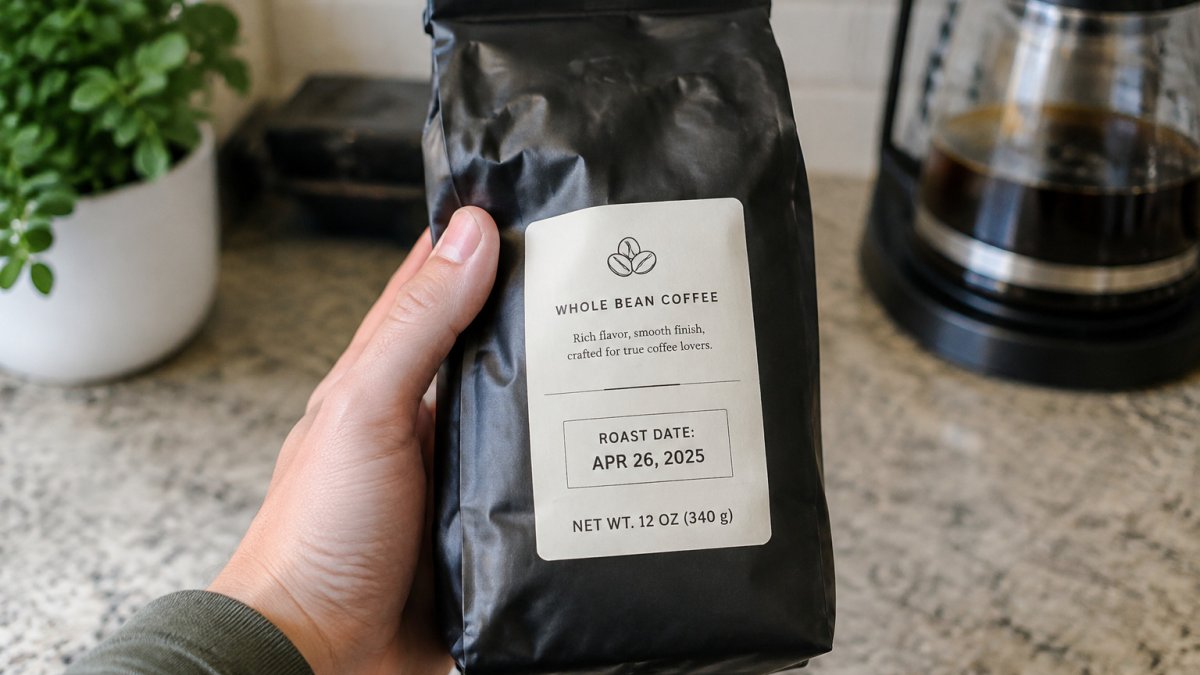
!Close-up of a hand holding a whole-bean coffee bag under a kitchen light, with the printed roast date label visible on the front
Start with the front of the bag. Look for a line that says "Roasted on" followed by a date, usually in month and day format.
Check these spots in order:
- The front label, near the product name
- The back of the bag, beside the ingredient or net weight details
- A sticker or stamp along the seal or the bottom edge
Coffee Roast Date vs Expiration Date: Why They Are Not the Same
A roast date tells you when the beans were roasted. An expiration or best-by date tells you when the seller expects the product to stay at its best, and it can be months later. The two dates answer different questions, so do not treat them as interchangeable.
Here is the difference in simple terms:
- Roast date: The day the beans were roasted. This is the date that matters most for freshness.
- Best-by date: A seller's guess about when quality may start to slip.
- Expiration date: A date that can be stamped on food packaging, though coffee rarely spoils in a way that makes it unsafe.
A bag with a long best-by date can still have beans roasted several months earlier. Always look for the roast date first, then use the other date as a secondary reference.
The two dates answer different questions, and the roast date matters most for freshness.
| Date type | What it tells you | Use it for |
|---|---|---|
| Roast date | The day the beans were roasted | Judging freshness |
| Best-by date | When quality may start to slip, a seller's guess | Secondary reference |
| Expiration date | A date stamped on food packaging | Rarely makes coffee unsafe |
How to Tell If Coffee Beans Are Fresh, and What to Do When No Date Is Shown
Freshness is easier to judge when you have a roast date. Most coffee tastes best within a few weeks of roasting, though the window varies by roast style and bean type. Whole beans generally hold their flavor longer than ground coffee.
If no roast date appears on the bag, try these steps:
- Check the packaging again, including the seal and the bottom.
- Look for a batch or lot code and search it on the roaster's website.
- Contact the retailer or roaster and ask for the roast date of that batch.
- Compare the bag's appearance. A dull, oily, or faded look can suggest older beans, though this is not a reliable test on its own.
Lot codes and best-by dates have limits. They may not show when the coffee was roasted, so a retailer or roaster is often the best source of a clear answer. If you cannot confirm a date, buy a smaller bag so you can test the flavor before committing to more.
Store beans in an airtight container away from heat, light, and moisture to help them keep their flavor after you open the bag. If you want to try fresh beans before buying a full bag, Borah Blend Coffee offers sample packs, and current pricing is available on the company website.
Ready to taste coffee that was roasted with freshness in mind? Browse the Borah Blend Coffee collection, check the roast date on every bag, and find the blend that fits your morning routine.
Frequently Asked Questions
How do I know the roast date of coffee?
Look on the bag first. Most specialty roasters print a roasted-on date on the front or back, often on a sticker or a printed panel near the valve or the seal. If you cannot find one, check the product page or packaging listing on the roaster's website, or contact the roaster directly with the batch or lot code printed on the bag. Retailers rarely know roast dates for supermarket bags, so the printed label is usually your only reliable source.
How long is coffee good after the roast date?
Whole beans in a sealed bag are typically at their best for about 3 to 4 weeks after roasting, and many people find they still taste good for several months after that. Ground coffee loses aroma faster, so it is best used within a few weeks. Storing beans in an airtight container away from heat, light and moisture helps preserve flavor. Compare the roast date against your own taste rather than relying on a fixed cutoff.
What should you do if a coffee bag has no roast date?
Start by checking the bag for a best-by or lot code, then look up the roaster's website or contact customer service and ask for the roast date tied to that lot number. If the roaster cannot tell you, assess freshness by the bag itself: a strong aroma when you open the seal can be a positive sign. When in doubt, ask the seller for the roast date before you buy.
